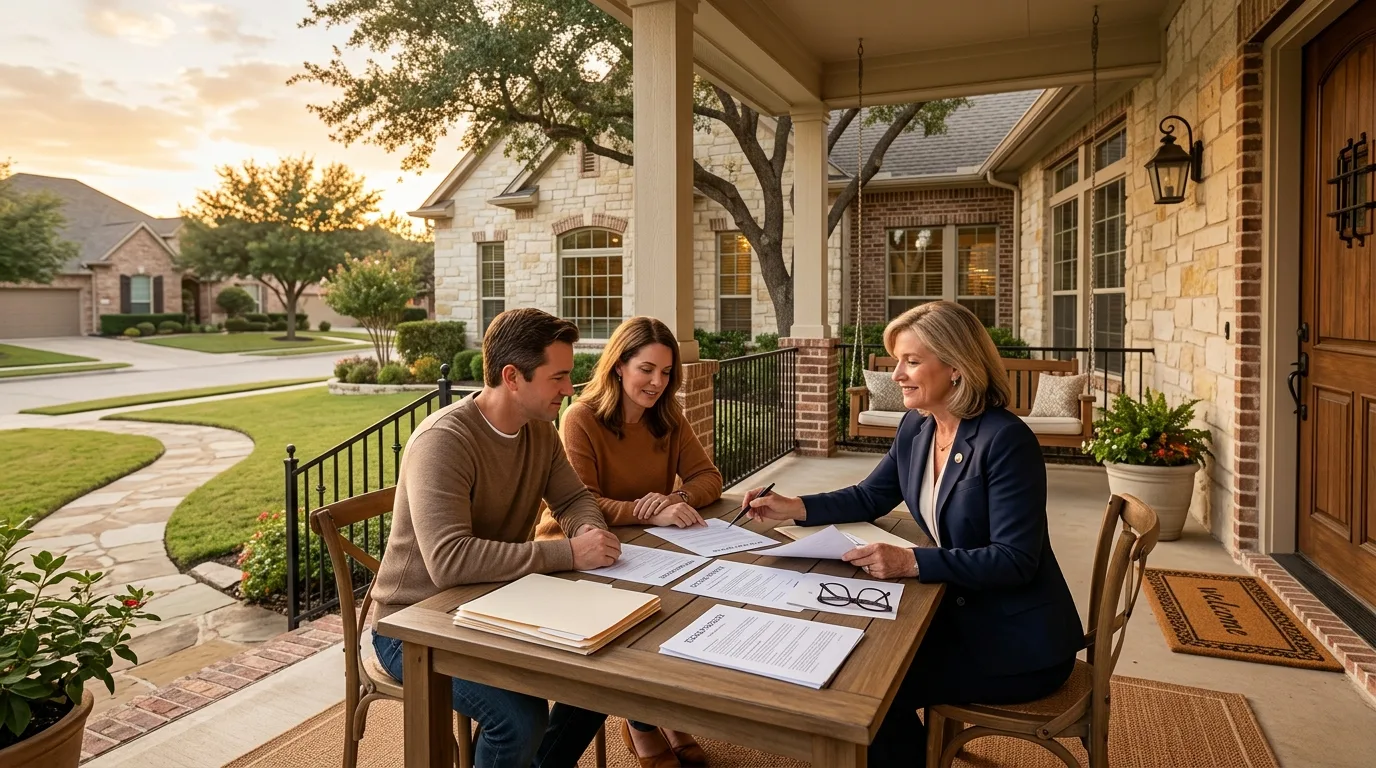
Losing a parent is hard enough without an empty house, a stack of paperwork, and siblings asking what happens next. If you are reading this in those first few weeks, the goal of this guide is simple: give you a clear sequence so the house does not become another source of grief.
What the Next Six Steps Look Like
Selling a deceased parent’s home in Texas follows the same six steps in almost every family. They do not all happen at once. Each one unlocks the next. Take them in order and the path stops feeling impossible.
- Find the will and important documents
- Open the right probate path
- Secure the house
- Get a date-of-death valuation
- Decide on the sale path and when to list
- Close and distribute the proceeds
The whole sequence usually runs 4 to 9 months on a normal Texas estate. Cleaner cases finish faster. Complicated ones take longer. Either way, breaking it into six concrete steps makes it manageable.
Step 1: Find the Will and Important Documents
Start with the will. In Texas, the original signed will is what the court needs — not a photocopy, not a scan, not a digital version. Likely places to check:
- A fireproof safe in the house
- A safe deposit box at the bank (you may need a court order to open it)
- The attorney who drafted the will
- The probate court of the county where they lived — some Texans file their wills with the clerk for safekeeping
- A trusted sibling or named executor
While you are searching for the will, also gather:
- Death certificate (order 8 to 10 certified copies — title companies, banks, and insurance all want originals)
- Deeds to the house and any other real property
- Mortgage statements and homeowner’s insurance policy
- Property tax bills
- Bank, brokerage, and retirement account statements
- Life insurance policies
- Recent tax returns
If no will turns up after a thorough search, the estate is treated as intestate, and the probate path shifts. Our affidavit of heirship guide and letter of heirship overview cover the no-will paths in detail.
Step 2: Open the Right Probate Path
Texas has more probate paths than most states. The right one depends on whether there is a will, what assets the estate holds, and how much debt is involved.
| Probate Path | Best Fit | Timeline | Cost Range |
|---|---|---|---|
| Muniment of title | Valid will, no unsecured debt | 6–10 weeks | $2,000–$3,500 |
| Independent administration | Valid will, normal debts | 4–9 months | $3,000–$8,000 |
| Dependent administration | Disputes or court oversight needed | 9–18 months | $5,000–$15,000+ |
| Small estate affidavit | No will, estate under $75K, no real property (mostly) | 4–8 weeks | $500–$1,500 |
| Affidavit of heirship | No will, real estate transfer only | Days to weeks | $200–$1,000 |
For most Texas families selling a parent’s home with a clean will and no major debt, muniment of title or independent administration are the right paths. Our overview of how probate works in Texas walks through how to choose.
Step 3: Secure the House
While you are picking a probate path, the house needs a caretaker. The first 30 days matter more than people realize.
- Insurance. Call your parent’s homeowner’s insurance company. Most policies have a vacancy clause that kicks in after 30 or 60 days unoccupied. You may need to switch to a vacant-home policy or have someone stay there overnight occasionally to maintain coverage.
- Utilities. Keep electric and water on. Vacant Texas homes in summer with the AC off grow mold in days. Set the thermostat to 80, not off.
- Locks and access. Change the locks or rekey. You do not know who has keys.
- Mail forwarding. Set up forwarding to the executor or to a sibling who can sort through it weekly.
- Valuables inventory. Walk through with a phone camera before family starts taking items. Jewelry, firearms, art, and titled items (cars, boats) should be photographed and listed.
- Refrigerator and food. Empty it within a few days. A power outage during a Texas summer turns a forgotten fridge into a six-month problem.
A lot of family conflict comes from differences over who took what during the first month. A simple inventory and a group text update protect everyone, including you.
If the house is across the state, or you are doing this from out of state, our guide for out-of-state executors selling Texas probate property walks through how to delegate this step. And if step 3 is where you feel most stuck — securing a house from a distance while grieving — that is exactly what our free consultation is built for. Send us the property address through the contact form and we will help you triage the first 30 days.
Step 4: Get a Date-of-Death Valuation
The value of the house on the date your parent died is the stepped-up basis for tax purposes. It matters more than people realize.
Order one of three things, in order of cost and authority:
- Broker price opinion (BPO) — free or low cost, good enough for most estates
- Comparative market analysis (CMA) from a probate-aware consultant — free
- Licensed appraisal — $400 to $700, required if the estate is large enough to file an estate tax return or if you expect family disputes
Keep the valuation in writing with the date prominent. When you eventually sell, your taxable gain is the sale price minus the date-of-death value. Even a 30-day delay between death and valuation rarely changes the result — but you need the document.
Step 5: Decide on the Sale Path and When to List
You have three main options to sell the house.
- MLS listing for full retail. Highest price, 30 to 60 days from listing to contract.
- Cash buyer (investor or iBuyer). Fast, as-is, but at a 20 to 30 percent discount. Our cash offer vs. MLS comparison walks through the math.
- Off-market investor pool. Through a probate-aware consultant. Between the two on price and speed.
The other timing question is when to list. You can list during probate in most Texas cases — you do not have to wait until the estate fully closes. With muniment of title or independent administration, the property can be marketed early and closing scheduled to align with the court order. The full sequence is in our executor’s guide to selling Texas probate real estate.
If the home sits in a strong Texas metro — the Austin area, Houston, Dallas, Plano, or Round Rock — listing during probate often gets you under contract before the court order even posts.
Step 6: Close and Distribute the Proceeds
At closing, the title company will need:
- Certified copy of the order admitting the will (or muniment order, or heirship judgment)
- Letters Testamentary (or muniment authority, depending on path)
- Death certificate
- Tax certificates from the county
- Signatures of the executor or the heirs, depending on path
Proceeds go to the estate account, not to any single heir. From there, the executor pays:
- Closing costs and any payoff on the mortgage
- Final property taxes and HOA dues
- Estate debts and creditor claims
- Attorney and consultant fees
- Distribution to heirs per the will or per Texas intestacy rules
Distribution before debts are paid creates personal liability for the executor — a mistake that comes up more than you would expect. Our executor duties guide covers the legal exposure in plain English.
How We Help Adult Children Specifically
Most of the families we work with are adult children handling a parent’s home for the first time. The emotional load on top of the logistical load is real. We move at the pace of the family, not the market. Calls happen in the evening if needed. Showings are scheduled around your work and the siblings’ schedules. You do not have to know the right next question — we will tell you.
You can start at the Texas Probate Process homepage to see how we work with families across all 254 counties.
Selling your deceased parent’s Texas home? We walk adult children through every step — from finding the will and securing the house to closing and distributing proceeds — at the pace your family needs.
Free consultation
Selling Your Parent's Texas Home? We'll Walk You Through It
Tell us about your Texas probate property. We'll respond within one business day — no obligation.