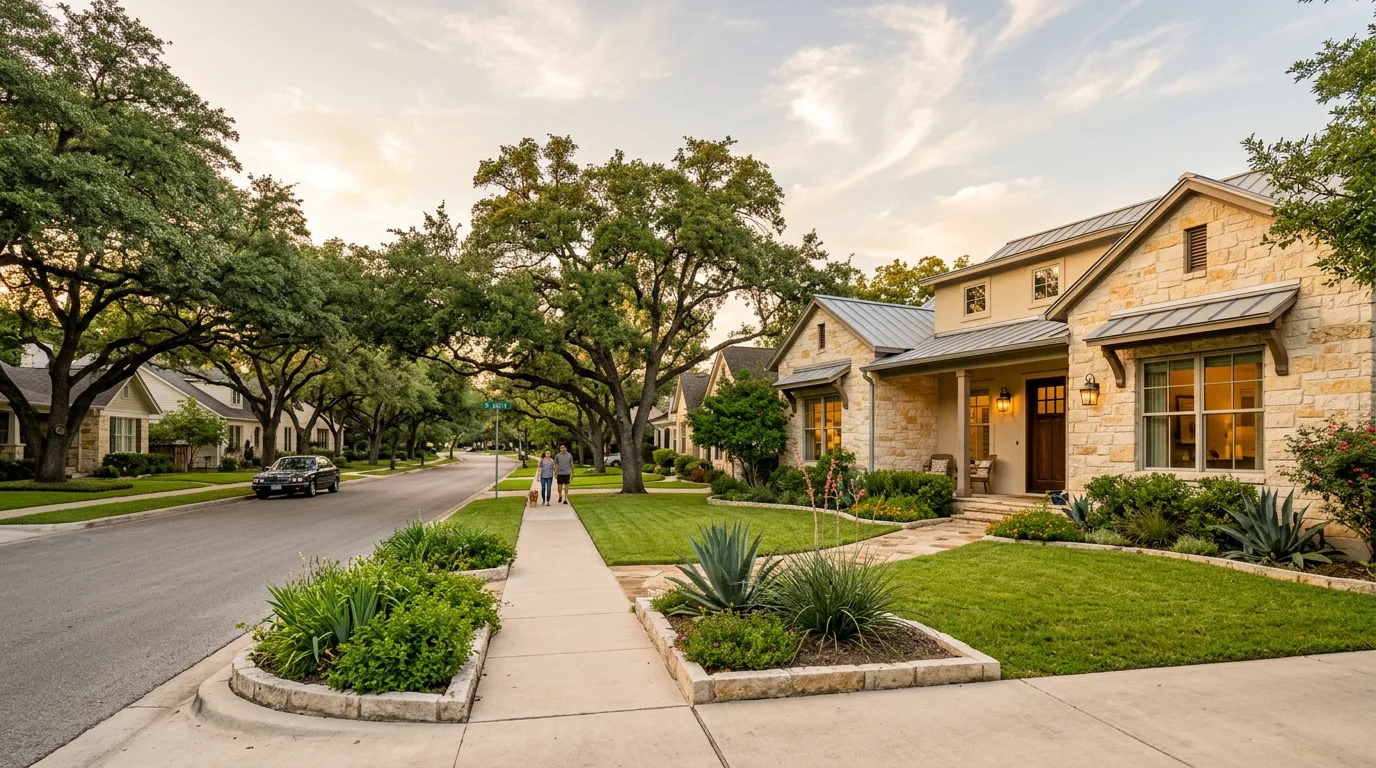
Probate Real Estate in Travis County, Texas
Travis County — home to Austin and the surrounding Hill Country suburbs — is one of Texas’s most active probate real estate markets. A decade of rapid appreciation means estates often hold substantial equity, and that equity can be lost quickly through poor pricing, rushed cash sales, or delays caused by probate complications. Whether you’re an heir, executor, or out-of-state family member, working with someone who knows both the Austin real estate market and Texas probate law protects what the estate has built.
Travis County Probate Court
Probate matters in Travis County are handled by:
Travis County Probate Courts (Courts 1 & 2) 1000 Guadalupe St, Austin, TX 78701 (512) 854-9258
Travis County uses statutory probate courts — dedicated judges who handle estate matters full-time. This specialization results in faster, more predictable timelines and more consistent rulings than counties where probate shares a docket with general civil cases.
How Long Does Probate Take in Travis County?
- Independent administration with a valid will: 4–6 months
- Muniment of title (no debts, clear will): 6–10 weeks
- Dependent administration or contested estate: 12–24+ months
- Intestate estate (no will): 5–9 months
The Austin real estate market moves quickly. Heirs often benefit from starting the listing process during probate rather than waiting for it to close — provided the executor has independent administration authority. This approach keeps the estate competitive with active market inventory.
Selling Probate Property in the Austin Area
The Austin metro spans multiple distinct submarkets, each with different buyer pools, price expectations, and strategies for probate sales.
| Area | Notes for Probate Sales |
|---|---|
| Central Austin / 78704, 78703 | High demand; teardown/renovation buyers common |
| South Austin | Strong retail buyer pool; as-is sales viable |
| East Austin | Rapidly appreciating; mixed retail/investor interest |
| Round Rock / Pflugerville | Suburban market; traditional listings perform well |
| Cedar Park / Leander | Growing market; dated homes attract investor interest |
| Dripping Springs | Rural lots and acreage — longer days on market |
| Lakeway / Bee Cave | Luxury market; estate sales often draw retail buyers |
The Austin Teardown Market
In many central Austin zip codes — particularly 78703 (Tarrytown, Brykerwoods) and 78704 (Travis Heights, Bouldin Creek) — older homes on good lots attract teardown buyers who may pay as much or more than a renovated property would fetch. For executors managing estates with older mid-century homes, getting a CMA that accounts for both as-is value and land value is essential before accepting offers.
Travis County Property Tax Considerations
Austin’s rapid appreciation has pushed property tax bills sharply higher. Heirs should address these issues promptly during estate administration:
- Homestead exemption is lost when the property owner dies — unless an heir qualifies and re-files with the Travis Central Appraisal District (TCAD)
- Over-65 freeze: A tax freeze held by an over-65 owner does not transfer to heirs; the property will be taxed at full current-year appraised value once ownership transfers
- Agricultural or wildlife exemptions on Hill Country tracts (Dripping Springs, Bee Cave, Lakeway) require active re-application during estate administration to avoid rollback taxes
- Delinquent taxes accrue at 1% per month in penalties and interest and can jeopardize the sale at closing if not addressed early
Community Property and Heirship in Travis County
Texas community property rules affect virtually every Austin probate sale involving a married decedent:
- With a will: The will controls how the decedent’s share (typically one-half of community property) is distributed
- Without a will: The surviving spouse retains their half of community property; the decedent’s half passes to children under intestate succession laws — even if the spouse is still living in the home
- Affidavit of Heirship: For simpler estates with clear ownership history and no debts, an Affidavit of Heirship can clear title without a full probate proceeding — ask your probate attorney if this applies
Out-of-State Heirs
Austin’s tech economy and university population mean heirs of Travis County estates frequently live in other states or abroad. Texas law accommodates remote heirs:
- A statutory durable power of attorney allows an out-of-state heir to authorize a local representative to act on their behalf
- The appointed executor can sign closing documents on behalf of the estate without each heir being physically present
- Electronic notarization is accepted in Texas, simplifying document execution for remote heirs
Why Work With a Local Probate Real Estate Specialist?
Probate sales in Travis County require coordination between the estate attorney, the probate court, the title company, and the real estate agent. An agent experienced in Austin-area probate can:
- Provide a CMA for the estate inventory filing — required by the probate court within 90 days of Letters Testamentary
- Navigate required court authorization steps without creating delays that cost the estate in carrying costs
- Connect the estate with local probate attorneys, title companies experienced with executor’s deeds, and estate sale companies
- Market to both retail buyers and investors — and know which approach maximizes net proceeds for the specific property
Frequently Asked Questions — Travis County Probate Real Estate
Can I list an Austin property before Letters Testamentary are issued? Yes. The named executor can engage an agent and list the property before formal court appointment, using a purchase contract contingent on Letters Testamentary being issued. In a competitive market like Austin, this approach prevents weeks or months of lost marketing time.
What is an independent administration and do most Travis County estates qualify? Independent administration gives the executor authority to manage and sell estate assets without seeking court approval for each transaction. Most Texas wills include independent administration language. If the decedent died without a will, the heirs can agree to an independent administration by filing a written agreement with the court. Your estate attorney will confirm whether this applies.
What type of deed is used in an Austin probate sale? An executor’s deed (when there is a will) or administrator’s deed (when there is no will). Austin-area title companies are familiar with these deeds and can coordinate with the estate attorney to ensure clear title at closing.
How are multiple heirs handled if they disagree about the Austin property? If the will names an independent executor, that executor can authorize the sale even if an heir objects. In intestate estates, all heirs hold an undivided interest and must agree to sell — or one heir can petition the court for a partition. Early mediation often resolves disputes faster and for less cost than litigation.
Is it worth repairing a probate property before listing it in Austin? It depends. In central Austin, even dated or deferred-maintenance homes can attract strong as-is offers from investors and renovation buyers. In suburban submarkets, targeted repairs — fresh paint, cleaning, minor fixes — can meaningfully improve the buyer pool and final price. A local specialist can give you a data-driven answer for your specific property.
Inherited or executor of a property in Travis County? We offer free, no-obligation consultations for Austin-area probate situations.
Free consultation
Get a Free Travis County Probate Consultation
Tell us about your Travis County probate property. We'll respond within one business day — no obligation.