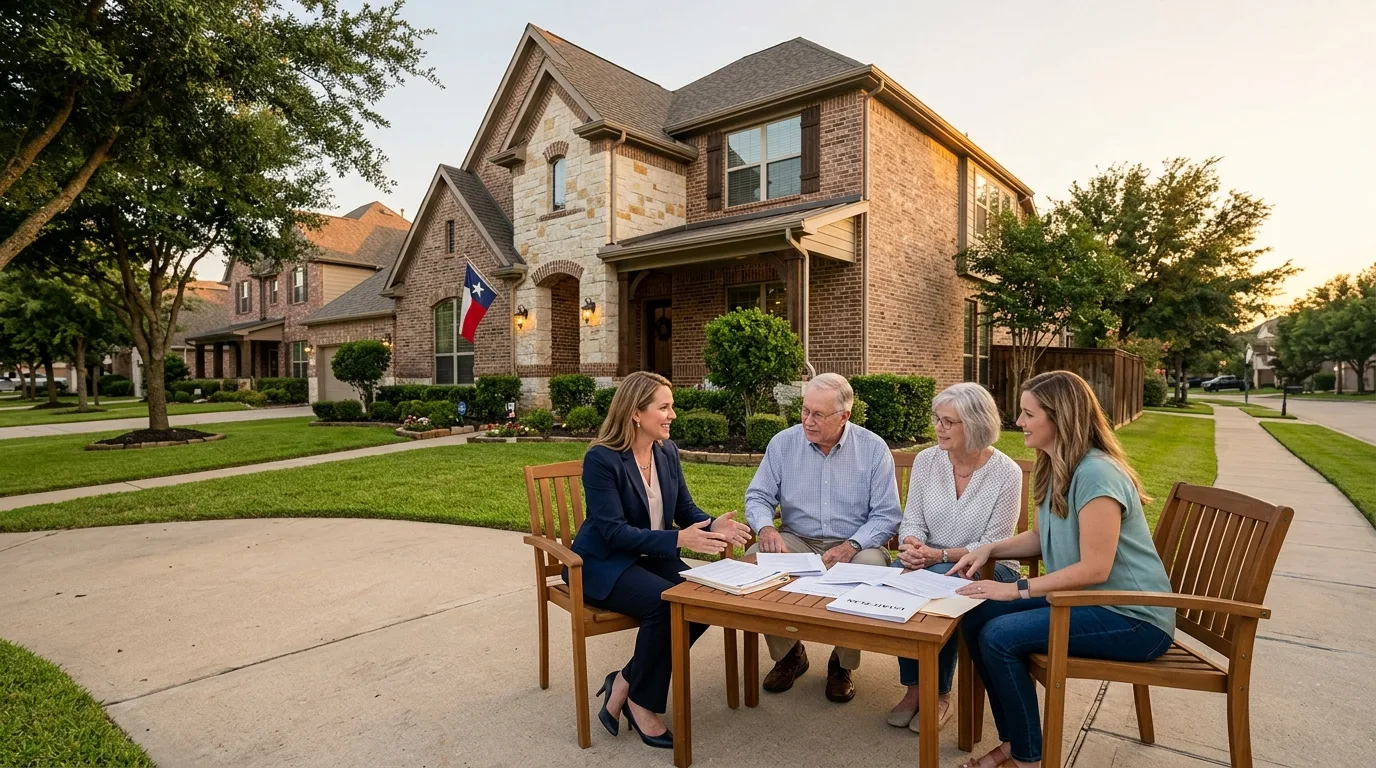
Bottom line: To sell a probate house in Katy, Texas, the executor first opens probate in the county where the deceased lived — usually Harris County, which has dedicated statutory probate courts in downtown Houston, though some Katy residents fall under Fort Bend or Waller County. After Letters Testamentary issue (typically 30–60 days), the executor can list the property and most sales close 4–6 months later. There are no upfront fees — a probate real estate consultant works on commission, paid only at closing.
Dealing with a parent’s or spouse’s estate while also trying to figure out where to file, which court to call, and how to list a house without making a costly mistake — that’s an overwhelming combination. William Zhang is a probate real estate consultant and the founder of texasprobateprocess.com — he helps Texas executors and heirs navigate the sale of inherited property across all 254 counties, including Greater Houston and the Katy area. This guide covers everything specific to a Katy probate sale: the three-county geography, the filing rules, and the sale process from start to closing.
Where Katy Probate Cases Are Filed (It Depends on Which County)
This is the question that trips up Katy families more than any other, and the answer is not what most people expect. Probate is filed in the county where the deceased lived, not where the property sits.
Katy straddles three Texas counties — Harris, Fort Bend, and Waller — and the same street can change counties depending on which side you’re on. So the first step is identifying the deceased’s home address and determining which county it falls in.
Here’s where each county’s probate filings are handled:
- Harris County — Harris County has four dedicated statutory probate courts at the Harris County Civil Courthouse, 201 Caroline Street in downtown Houston. These courts handle probate full-time, which means judges develop deep expertise and timelines tend to be more predictable. See the Harris County probate guide for details on how these courts operate.
- Fort Bend County — Cases are heard at the Fort Bend County Court at Law in Richmond, the county seat. Fort Bend uses a Court at Law rather than a statutory probate court, which means the same judge handles a broader docket.
- Waller County — Cases are heard at the Waller County Court at Law in Hempstead. Waller County has a smaller caseload and a Court at Law structure similar to Fort Bend.
The structural distinction matters: Harris County’s four statutory probate courts operate exclusively on probate matters, while Fort Bend and Waller use Courts at Law with mixed dockets. That generally means Harris County cases move more consistently, though the larger volume of filings can create its own delays.
For background on how the Katy real estate market interacts with Harris County probate courts, the Katy city guide covers the local property landscape.
How to Tell Which County Handles Your Case
Pull the deceased’s last home address and look up the county. Most Katy residential neighborhoods align with one county, though the boundaries don’t always follow obvious streets or landmarks.
As a general guide:
- 77449 (central Katy, Katy ISD core) — Harris County
- 77450 (west of Katy proper, near Mason Road corridor) — mostly Harris County, with some parcels in Fort Bend
- 77493 (newer development, Katy Ranch area) — Harris County
- 77494 (Cinco Ranch area) — split: the northern and western portions are Harris County; portions to the south and east push into Fort Bend County
Waller County covers a smaller piece of the Katy area, mostly in the far northern and western rural fringe — less common for residential probate.
If you’re not certain, search the address in the Harris County Appraisal District (HCAD) database or the Fort Bend Central Appraisal District (FBCAD) lookup. Whichever district shows the property is likely the correct county for the deceased’s domicile if they lived at that address.
One more important note: the deceased’s domicile controls the filing county, not the property address. If your parent owned a home in the 77494 zip code but their primary residence — the address on their driver’s license — was in Harris County, the probate case opens in Harris County even if the property itself sits in Fort Bend. This comes up regularly in Katy estates where homeowners owned multiple properties or recently moved.
The Katy Probate Property Sale Process, Step by Step
The core process is the same under Texas law regardless of which county handles the case:
- File an application for probate in the correct county court and schedule a hearing
- Qualify as executor and receive Letters Testamentary — the document authorizing you to act on the estate’s behalf
- File an inventory of estate assets within 90 days
- Publish notice to creditors; the claims period runs four months from first publication
- List and prepare the property — you can start as soon as Letters Testamentary are in hand
- Accept an offer, satisfy title company requirements, and close
- Pay creditor claims from proceeds, distribute the remainder to beneficiaries, and close the estate
For a complete walkthrough — including what title companies require and how to sign the contract as executor — see the Texas probate property sale process guide.
How Long It Takes
Most Katy estates in an independent administration move from filing to closing in 4–6 months. The creditor claims period (four months from first publication) is usually the longest fixed window. Harris County’s four statutory probate courts handle exclusively probate, which creates predictable scheduling — though the county’s high filing volume occasionally delays first hearings. Fort Bend and Waller have lighter caseloads but smaller staffs.
Dependent administration adds significant time — expect 10–14 months or more. For a full breakdown, see How Long Does Probate Take in Texas and How Long Does an Executor Have to Sell a House in Texas.
What Katy Probate Houses Are Selling For
Katy is one of the Houston metro’s strongest family-oriented suburban markets, with housing stock predominantly from the 1990s through 2010s in master-planned communities like Cinco Ranch, Cross Creek Ranch, and Falcon Point. Buyers pay a premium for Katy ISD school zones, and Energy Corridor employment drives demand in specific neighborhoods — though hybrid work shifts have affected that dynamic.
Do not rely on metro Houston median prices for pricing a Katy probate property. Pricing varies significantly by neighborhood, HOA, school zone, flood history, and specific section within a community. A comparative market analysis from someone active in the Katy submarket is more reliable than county-level averages.
Common Issues With Katy Probate Properties
HOA estoppel letters. Most Katy homes sit in master-planned communities with one or more HOAs. The title company needs an estoppel letter from each HOA confirming dues are current before closing — these take 2–3 weeks and cost the estate money. Request them early.
Multi-heir disagreements. Sibling disputes about pricing, timing, or repairs are where Katy estate sales stall most often. See Selling Inherited Property With Multiple Heirs in Texas.
Out-of-state heirs. Katy’s energy-industry workforce means heirs are frequently in other states or abroad. Texas Remote Online Notarization lets them sign documents without traveling. See Out-of-State Executor Selling Texas Probate Property.
Tenant-occupied properties. If the estate includes a rental, the lease survives the owner’s death and tenants have rights. See Selling an Inherited House With Tenants in Texas.
Flood history. Portions of Katy near Barker Reservoir flooded during Hurricane Harvey. Disclosure is legally required — check HCAD flood records before listing.
Selling Before Probate Closes vs. After
You do not need to wait until probate is fully closed. In an independent administration, the executor can list, accept an offer, and close the sale while probate is still open — provided Letters Testamentary are current and valid. What you cannot do is distribute proceeds to beneficiaries until the four-month creditor claims period finishes running; the funds sit in the estate account until then.
Can You Sell a House Before Probate Closes in Texas? covers the timing rules and what the contract language looks like.
What It Costs to Sell a Probate House in Katy
Probate sale costs fall into two categories: the legal and court costs of the probate itself, and the real estate transaction costs.
Legal and court costs typically include the court filing fee (varies by county, generally a few hundred dollars), attorney fees for the probate filings and creditor notice (often $2,000–$5,000 for a simple independent administration), and any appraiser fees if a formal appraisal is needed for the inventory filing.
Real estate transaction costs are standard seller costs: the real estate commission (paid at closing from proceeds), title insurance, and any pre-sale repairs or estate cleanout the executor authorizes. There are no upfront costs — a probate real estate consultant earns a commission at closing, the same as any other sale.
All of these costs come out of the estate proceeds before distribution to beneficiaries. For a full cost breakdown, see Cost to Probate a Will in Texas.
If the estate has limited cash flow before the sale closes, talk to a Texas probate attorney about options for covering carrying costs in the interim.
Working With a Probate Real Estate Specialist in the Katy Area
A Katy probate sale has more moving parts than a standard home sale — court authority documents, HOA estoppel letters from multiple associations, a three-county filing question, and coordination with the estate attorney. A probate real estate specialist who regularly works the Katy and Greater Houston market knows how to keep those pieces aligned so the sale doesn’t stall on a missing document or a missed HOA deadline.
For help finding legal representation for the probate filings, see /find-a-probate-attorney.
Frequently Asked Questions
Which county handles probate for a Katy property?
It depends on where the deceased lived. Most Katy addresses fall in Harris County — four statutory probate courts in downtown Houston, detailed in the Harris County probate guide. Some 77494 and 77450 addresses are Fort Bend County (Richmond). A small outer-Katy area is Waller County (Hempstead). Check the deceased’s last home address against the county appraisal district to confirm.
Can I sell a Katy probate house before probate closes?
Yes. In an independent administration you can list and close the sale while probate is still open — you need current Letters Testamentary and the proceeds stay in the estate account until the creditor claims period runs. See Can You Sell a House Before Probate Closes in Texas? for the full rules.
How long does Harris County probate take?
A straightforward independent administration typically yields Letters Testamentary 30–60 days after filing, with the full estate closing in 6–9 months. Harris County’s four statutory probate courts handle nothing but probate, which makes timelines more predictable than counties with shared dockets.
What if the deceased lived in Fort Bend but owned a Katy house?
The probate case opens in Fort Bend County, where the deceased was domiciled. The Fort Bend County Court at Law in Richmond issues Letters Testamentary, and the executor uses those letters to authorize the sale of the Harris County property. The property’s location does not determine where probate is filed.
What if other heirs disagree about selling?
A named executor with independent administration authority can generally sell without unanimous heir consent. If the property is owned jointly as tenants in common — common when there’s no will — all co-owners must agree or one can petition for a partition. See Selling Inherited Property With Multiple Heirs in Texas for how to work through disagreements.
What to Do Next
Katy probate sales are manageable once you know which county court you’re dealing with and what the process requires. The three-county geography adds a step at the beginning — confirm the deceased’s domicile county — but once that’s settled, the process follows the same Texas independent administration path as anywhere else in the state.
Texas Probate Process, founded by probate real estate consultant William Zhang, helps families across all 254 Texas counties understand their options and sell inherited property without the usual confusion. Fill out the form below and we’ll respond within one business day.
Free consultation
Talk to a Katy Probate Real Estate Specialist
Tell us about your Harris probate property. We'll respond within one business day — no obligation.